


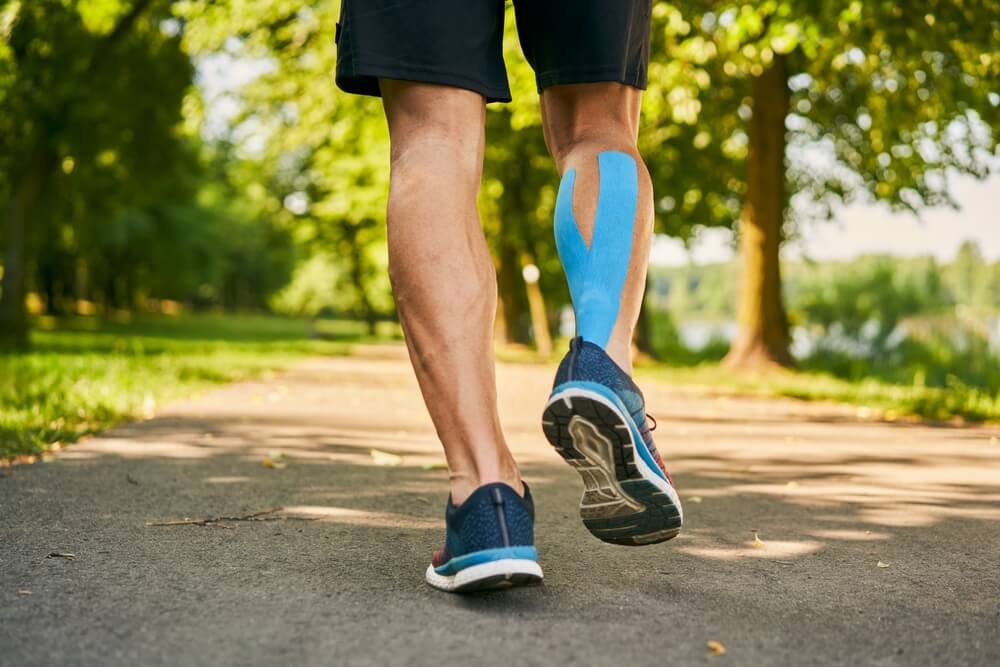
You felt the pop, you had the surgery, and now you are staring at a boot and wondering how long it will be before you can walk normally, run, or play again. Recovering from an Achilles tendon repair is a long process, and full recovery commonly takes about a year. Some people report it takes closer to two years to reach all of their goals.
The good news is that recovery tends to follow a predictable sequence. Below is a phase-by-phase look at what physical therapy usually involves after Achilles surgery. Every surgeon has a protocol, and every patient progresses differently, so think of this as a general roadmap rather than a schedule. Your surgeon and physical therapist will set your exact timeline.
For background on Achilles injuries, symptoms, and diagnosis, see our Achilles rehab page.
Why Physical Therapy Matters After Achilles Repair
Surgery reconnects the tendon. Rehab rebuilds everything around it. The calf weakens during weeks of immobilization, ankle motion stiffens, and walking, running, and jumping all have to be relearned under progressively heavier loads. Post-operative physical therapy is how you get your mobility, strength, coordination, speed, and stamina ready for your sport, recreation, or job.
Pacing matters too. The repaired tendon needs protection early on, then gradually increasing load to get stronger. Too little load can leave you weak, and too much too soon can put the repair at risk. A good rehab plan balances the two.
Phase 1: Protection (Roughly the First 6 to 8 Weeks)
Most patients spend roughly six to eight weeks in a cast or boot after surgery, although surgeons differ on the exact timeframe and setup.
What this phase usually looks like:
- Your ankle is protected in a splint, cast, or boot
- Weight bearing is limited at first and increased according to your surgeon’s protocol
- Managing swelling, protecting the incision, and keeping the rest of your body moving
- Once your surgeon allows it, physical therapy begins gradually increasing ankle motion and activity, alongside exercises for the hip, knee, and core
Goals: protect the repair, let the incision heal, control swelling, and maintain fitness elsewhere.
Phase 2: Out of the Boot (Roughly Weeks 6 to 12)
As your surgeon clears you to wean out of the boot, therapy shifts toward restoring normal movement.
What this phase usually looks like:
- Gradually transitioning out of the boot and into a shoe
- Working on a normal walking pattern without a limp
- Restoring ankle range of motion progressively, without forcing the stretch
- Beginning calf strengthening with lighter loads, then building up
- Balance and single-leg control work
Goals: walk normally, restore safe range of motion, and start rebuilding calf strength.
Phase 3: Building Strength (Roughly Months 3 to 6)
This is where much of the hard work happens. The calf has to become strong enough to handle running, jumping, and quick changes of direction.
What this phase usually looks like:
- Progressive calf strengthening, working toward single-leg heel raises
- Strength work for the whole leg and trunk
- Conditioning that respects the healing tendon, such as cycling
- Tools like blood flow restriction training when appropriate, which allows strength gains with lighter loads
- A return to running progression once you meet the strength and movement criteria your therapist and surgeon set
Goals: close the strength gap between legs and prepare for impact.
Phase 4: Running, Jumping and Return to Sport (Roughly Months 6 to 12 and Beyond)
Being able to jog is not the same as being ready to play. This phase rebuilds the speed, power, and confidence that sport demands.
What this phase usually looks like:
- Progressive running, then sprinting and change of direction
- Jumping and landing work that builds up gradually
- Sport-specific drills and conditioning
- Objective testing before a return to full practice and competition
Athletes typically need to pass a set of tests before returning to full activity. Our return to sport programming and testing combines individualized strength, sprinting, agility, and conditioning work with objective testing, sometimes using force plates, to help bridge the gap between “normal” and sport-ready.
Goals: restore power, speed and confidence, and return to sport when you are actually ready, not just when the calendar says so.
Does the Surgical Technique Change the Timeline?
Surgeons use different techniques to repair the Achilles, including minimally invasive options that use small incisions. We wrote about one of them, the PARS Achilles repair technique, after Aaron Rodgers’ Achilles tear put it in the spotlight. Your surgeon’s technique and protocol can influence how quickly you move through early phases, but the later strength and return to sport work still has to be earned.
Signs to Call Your Surgeon
Surgical repair carries risks, including infection, nerve injury, wound breakdown, and blood clots, and the tendon can tear again after repair. Contact your surgeon or provider if you notice:
- Swelling or pain in your leg, ankle, or foot that gets worse
- A purple color to your leg or foot
- Swelling in your calf and foot
- Fever
If you have shortness of breath or difficulty breathing, call 911 or go to the emergency department.
Frequently Asked Questions
How long after Achilles surgery can I walk normally?
Most people spend roughly six to eight weeks in a cast or boot, then work on walking without a limp as they transition out of it. When that happens depends on your surgeon’s protocol and how your ankle and calf respond.
When can I run after Achilles surgery?
Running usually comes later in rehab, after you have rebuilt enough calf strength and control. Your therapist and surgeon will use strength and movement criteria, not just time, to decide when you are ready.
How long until I can return to sports?
Full recovery commonly takes about a year, and some people need closer to two years to reach all of their goals. Return to sport should be based on testing and readiness.
When should physical therapy start after Achilles surgery?
Therapy usually begins within the first several weeks after surgery, once your surgeon clears it. Early sessions focus on protecting the repair, gradually restoring ankle motion and keeping the rest of your body moving.
Rehab After Achilles Surgery at Resilient
Our therapists are Doctors of Physical Therapy who have also coached strength and conditioning or worked as personal trainers, which lets us take you from the boot all the way to sport-ready training under one roof. If you are preparing for or recovering from Achilles surgery, schedule an appointment at any of our six clinics in New York, New Jersey, and Connecticut. You can also learn more about our post-operative rehabilitation programs.
Related Blogs

Our Patients  Us!
More Testimonials

